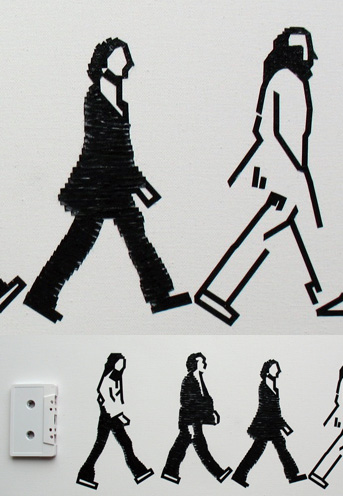
on the 15th of april at the ‘KABK’ art school in the hague, there will be an evening of debate about ‘political campaigns’ amongst those taking part are the ‘designpolitie’, ‘thonik and ‘syb’, more info via the organisation here
on the 15th of april at the ‘KABK’ art school in the hague, there will be an evening of debate about ‘political campaigns’ amongst those taking part are the ‘designpolitie’, ‘thonik and ‘syb’, more info via the organisation here
one of the benefits of teaching at an art school (for me at least) is the chance to discover and share new ideas and learn new stuff (this is also one of the big advatages of being a graphic designer in general if you ask me) anyhow after a talk with one of my students last week i became interested in finding out about just exactly how dance is ‘made visual’ or rather how physical movement can be translated into a visual form on paper or rather whether it can be translated into an understandable and reproducible language, the answer is yes..

last friday i went to meet an english dance teacher ‘judy maelor thomas’ who is a rehearsal director at the dutch national ballet and one of the very few people on earth who is trained in the art of choreology, judy kindly took some time to explain the concept and grammar behind this form of dance notation… for the untrained eye (mine) it at first looks very similar to sheet music, the difference however is that ‘choreology’ is based on the proportions of the human body (as seen from behind) and the 5 bars on the notation paper (shown above) represent five specific points on the body (see diagram below)

it turns out that choreographers don’t in general, have a standard methodology for writing down how a dance production fits together, each choreographer has his own method (sketches, doodles or even written out in words) the choreologist (or is it choreologer?) has the task of recording all of the movements and positions of the dance so that it can be reproduced at a later stage… for more info or to find out just how difficult it is to learn visit the benesh institute or the dancewrite website, it is a visual language or code that was originally invented by matematician and artist rudolph benesh in the 1950’s, the following comes from the site
…the Benesh system is, and can be, much more than a means of recording theatre dance. It has been used successfully by anthropologists, by physiotherapists to analyse and record patient movement, and even in an ergonomic study of seating in an airport.

i would love to use this somehow in a poster design for the ballet, for example…

this fly poster for local nightclub ‘the sugar factory’ caught my eye precisely because of it’s uncommonly subdued approach compared to the average nightclub poster (i’ve no idea who made it)

some very ecclectic/anarchic/ironic/ilustrative/lofi/humanist/playful and very funky work from south africa

many thanks to ‘syb’ for the tip, this work reminds me of dutch outfit ‘studio boot’ in their heyday… very nice & very irreverent


cool cassette tape portrait series entitled ‘ghost in the mahine’
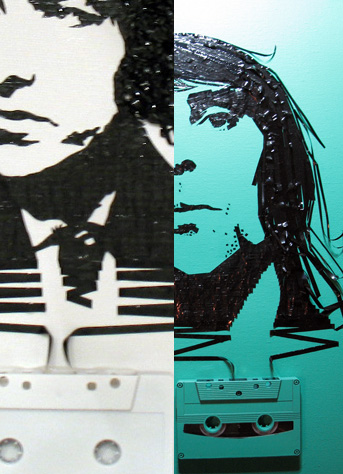
made by illustrator iri5 (thanks to ‘maarten’ for the tip)